
Click Here To Go To Psycho Solo Diver
  • HOME
  • You are currently browsing the Psycho Solo Diver – Online Diving Blog and more! weblog archives.

  • Categories

  • Blogroll

    Archives

  • February 2026
  • March 2021
  • February 2021
  • December 2020
  • August 2020
  • July 2020
  • June 2020
  • February 2020
  • October 2019
  • September 2019
  • July 2019
  • June 2019
  • March 2019
  • June 2018
  • May 2018
  • April 2018
  • March 2018
  • February 2018
  • January 2018
  • December 2017
  • November 2017
  • October 2017
  • September 2017
  • August 2017
  • July 2017
  • June 2017
  • May 2017
  • April 2017
  • March 2017
  • February 2017
  • January 2017
  • December 2016
  • November 2016
  • October 2016
  • September 2016
  • August 2016
  • July 2016
  • June 2016
  • May 2016
  • April 2016
  • March 2016
  • February 2016
  • January 2016
  • December 2015
  • November 2015
  • October 2015
  • September 2015
  • August 2015
  • July 2015
  • June 2015
  • May 2015
  • April 2015
  • March 2015
  • February 2015
  • January 2015
  • December 2014
  • November 2014
  • October 2014
  • September 2014
  • August 2014
  • July 2014
  • June 2014
  • May 2014
  • April 2014
  • March 2014
  • February 2014
  • January 2014
  • December 2013
  • November 2013
  • October 2013
  • September 2013
  • August 2013
  • July 2013
  • June 2013
  • May 2013
  • April 2013
  • March 2013
  • February 2013
  • January 2013
  • December 2012
  • November 2012
  • October 2012
  • September 2012
  • August 2012
  • July 2012
  • June 2012
  • May 2012
  • April 2012
  • March 2012
  • February 2012
  • January 2012
  • December 2011
  • November 2011
  • October 2011
  • September 2011
  • August 2011
  • July 2011
  • June 2011
  • May 2011
  • April 2011
  • March 2011
  • February 2011
  • January 2011
  • December 2010
  • November 2010
  • October 2010
  • September 2010
  • August 2010
  • July 2010
  • June 2010
  • May 2010
  • April 2010
  • March 2010
  • February 2010
  • January 2010
  • December 2009
  • November 2009
  • October 2009
  • September 2009
  • August 2009
  • July 2009
  • June 2009
  • May 2009
  • April 2009
  • March 2009
  • February 2009
  • January 2009
  • December 2008
  • November 2008
  • October 2008
  • September 2008
  • August 2008
  • July 2008
  • June 2008
  • May 2008
  • April 2008
  • March 2008
  • February 2008
  • January 2008
  • December 2007
  • November 2007
  • October 2007
  • September 2007
  • August 2007
  • July 2007
  • June 2007
  • May 2007
  • April 2007
  • March 2007
  • February 2007
  • January 2007
  • December 2006
  • November 2006
  • October 2006
  • September 2006
  • August 2006
  • July 2006
  • June 2006
  • May 2006
  • April 2006
  • March 2006
  • February 2006
  • January 2006
  • December 2005
  • November 2005
  • October 2005
  • September 2005
  • August 2005
  • July 2005
  • June 2005
  • May 2005
  • April 2005
  • March 2005
  • February 2005
  • January 2005
  • December 2004
  • November 2004
  • October 2004
  • September 2004
  • August 2004
  • July 2004
  • June 2004
  • May 2004
  • April 2004
  • March 2004
  • February 2004
  • January 2004
  • December 2003
  • November 2003
  • October 2003
  • August 2003
  • July 2003
  • June 2003
  • May 2003
  • April 2003
  • December 2002
  • November 2002
  • October 2002
  • September 2002
  • « Previous PageNext Page »

    April 28, 2011

    Human Planet DVD Set Profiles Extreme Divers
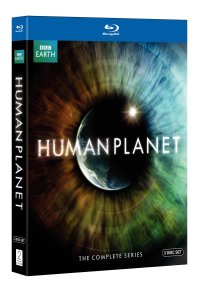
    Own Human Planet on DVD or Blu-ray!

    On April 26, 2011, the Human Planet DVD set was released for sale; I have been fortunate enough to review the entire series over last week.

    Human Planet is an eight part documentary series that profiles how humans have adapted to live in various climates and regions throughout the Earth – Oceans, Deserts, Arctic, Jungles, Mountains, Grasslands, Rivers and Cities.

    After three years of filming in 80 countries, the end result is one of the most breath taking and beautifully filmed documentaries that I’ve ever seen – quite a nice change from the warmed over sitcoms and fake “reality” shows that seem to inundate television today.

    The DVD set also has over three hours of previously unseen footage, including a portion called “Human Planet Behind The Lens,” which shows how some of the scenes were shot and the crew’s interaction with the subjects.

    The first series is “Oceans – Into the Blue” – how humans live and have adapted to living in, on top of, and around the oceans.

    Compressor divers in the Philippines

    One of the sections in this episode profiles compressor divers in the Philippines – divers who dive to 130 feet, for sometimes hours at a time, herding fish into nets and breathing off of plastic hoses of compressed air, without a regulator, and all for $25 a week.

    For the readers who may not know what a regulator is, it is a piece of diving equipment that adjusts the pressure of compressed air to match the surrounding water pressure and give air only on demand.

    Without a regulator, these guys are breathing off a tube that constantly streams compressed air down their throats, sort of like breathing off a regulator that is free flowing.

    These are the most insane divers that I’ve ever heard of!

    The “Behind The Lens” portion of the first DVD documents the relationship that developed between the BBC photographers and the compressor divers, which I found to be equally as fascinating as the original story.

    To view this video on YouTube, click here.

    The end of the first episode profiles the nationless Bajau people in the Coral Sea, near Borneo.
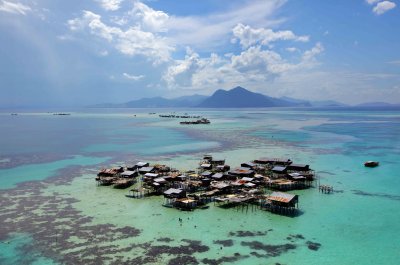
    Bajau people in the coral sea

    They actually live in houses that are raised above the water.

    One of the inhabitants is a free diver who, on one breath, can dive 65 feet under water and hunt for up to five minutes.

    Taking water pressure into consideration, I bet this man can hold his breath for 15 minutes on the surface.

    To view this video on YouTube, click here.

    Have you ever seen someone walking along the ocean bottom, holding their breath at 65 feet below the surface?

    The whole series is as fascinating as the first episode.

    Many times I would look at a scene and think, “That guy is crazy” – but then I would think, “How the hell did they film that?”

    Again, the “Behind The Lens” section at the end of each episode tells how some of it was done.

    The below video will give you an idea of the astounding photography in this documentary series:

    To view this video on YouTube, click here.

    After viewing all eight of the episodes, there is one fact that I will retain for the rest of my life – “Tarantulas taste better when they’re cooked like marshmallows!”

    That tidbit of information I got from Episode 4: Jungles – People of the Trees, when they profiled tarantula hunting in Venezuela.

    It was said in such a matter of fact way that I found it very funny.

    This being a BBC documentary, pretty much everything is referenced in metric measurements, and being an American, I don’t think right off hand in metric measurements.

    When I heard of the Mali desert being sweltering hot at 45 degrees, I had to think – “Oh, yeah, metric! Double it and add 30.”

    I actually had to stop the DVD and figure out how deep 40 meters is – 130 feet.

    An American measurement subtitle option would have been a nice feature, but now I’m a lot better at the metric system.

    As my British friend told me, “If you have at least two functioning brain cells, the metric system is actually easier than the Imperial System.”

    The Human Planet DVD series is a welcomed addition to my DVD collection!

    More clips from Human Planet are available here:

    To view this video on YouTube, click here.

    Human Planet arrived on DVD and Blu-ray April 26, just two days following the broadcast conclusion. You can also catch Human Planet on the Discovery Channel April 17 and 24 at 8pm. To learn more about Human Planet you can visit the official website at www.HumanPlanetBlog.com or on Facebook at www.Facebook.com/HumanPlanetTVSeries.


    April 25, 2011

    Free Trip To Catalina On Your Birthday

    Filed under: News Clippings

    Many thanks to Dan from the Divevets for pointing out this great deal, assuming you have your birthday free from work.

    Catalina Express is celebrating their 30th Anniversary by giving a Free Pass to anyone who wants to go to Catalina on their birthday.

    Here’s What You Do:

    – You must pre-register online!

    – You will receive an email confirmation from which you will download and print your Free Birthday Pass.

    – Before traveling, make your boat reservations online or by calling 800-995-4386. Your birthday promotion code, found on the Free Pass, must be entered for online reservations or mentioned at time of booking by phone.

    – Bring your Free Pass and valid photo I.D. to the Catalina Express ticket window on your birthday and hop aboard the Catalina Express to Catalina Island!

    Free Pass On Your Birthday – Details:

    – Valid for round trip travel on your birthday between May 1, 2011 to April 30, 2012.
    You MUST begin travel on your actual birth date. You may return anytime within 30 days after your departure date.

    – You must provide proof of your birth date and valid I.D. which includes a Driver’s license, State or Government issued I.D. or Government issued Passport. If you are under age 18 and do not have any of the above, either an original or notarized birth certificate must be shown. School IDs or children security IDs are not acceptable. Photocopies are not acceptable.

    – Your valid I.D. name must match Free Pass.

    – Valid for general seating only.

    – Subject to availability.

    – No refunds, no cash value, non transferable.

    The original promotion offer can be found here.

    « Previous PageNext Page »


    RSS Subscribe
    Subscribe!


    ©Copyright 2002-2026 Psychosolodiver.com. All Rights Reserved. However, if you are going to steal anything from this site, please give me credit and link back.