Click Here To Go To Psycho Solo Diver
  • HOME
  • You are currently browsing the Psycho Solo Diver – Online Diving Blog and more! weblog archives for May, 2009.

  • Categories

  • « Previous PageNext Page »

    May 16, 2009

    Pirate Rafting The Killer Kern River

    The upper Kern river apparently peaked today at 2,912 cubic feet per second, so it’s back up to the Kern River for some rafting.

    This may be the last really good weekend of rafting due to the crappy snow fall last Winter.

    Next weekend is Memorial Day; the water may be good but the crowd makes it too much of a pain in the ass to have fun.
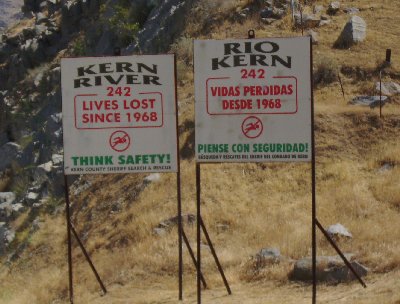
    The Kern River Death Count remained unchanged at 242.

    The Kern River Death Count remained unchanged from last year at 242, even though we know of at least eight additional deaths since then.

    I think it’s ironic that just as many Americans as Mexicans have died on the Kern – 242 each; so I guess that would be 484 total?

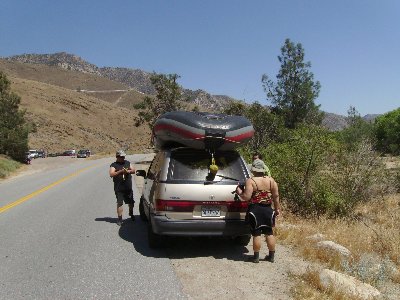
    Pirate Rafting the Kern. On the way up, Instructor John told us that the commercial operators are really hurting for business and that private boats are considered “Pirate Rafters” since we are taking business away from them.

    Cool, we’re pirates!
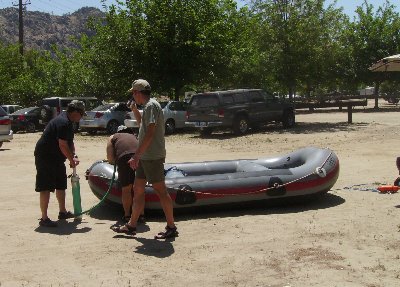
    Inflating the pirate boat.

    We inflated the raft at Frandy camp ground before hauling it up river, past the Power House.
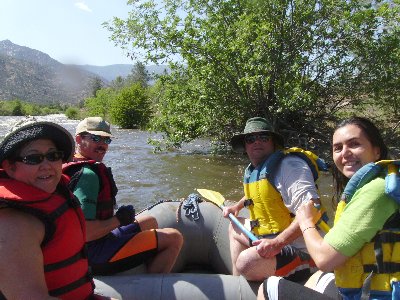
    Here's the front of the raft from John's perspective.

    Here’s the front of the raft from John’s perspective.

    John handed the camera back to me, I turned and yelled, “Tree!”

    “All forward! All forward,” John yelled.

    We barely missed getting all of our heads ripped off by the approaching branches.
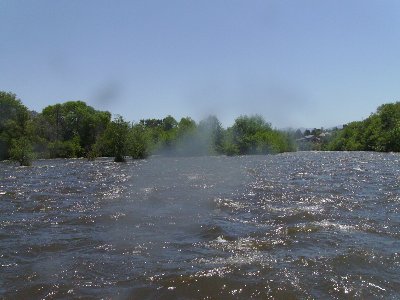
    The water was so high, the islands in the middle of the river were flooded.

    The water was so high, the islands in the middle of the river were flooded.

    We went through the Power House rapids without a problem – a really fun ride, in addition to the four other rapids along the way to the class three Euwing rapids.

    There were teenagers on the banks of Euwing with professional cameras taking pictures of the rafters, hoping to make a few bucks – obviously they did with us.

    We approached the Euwing rapids…
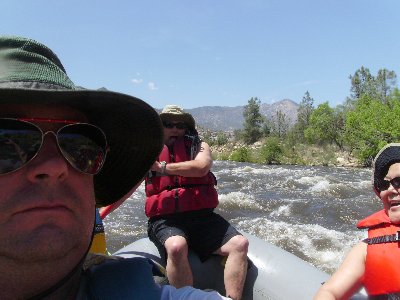
    Oh my God, we're all going to die!

    John yelled, “Oh my God, we’re all going to die!”

    Notice how composed and macho I am.

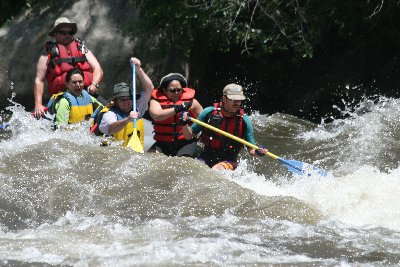
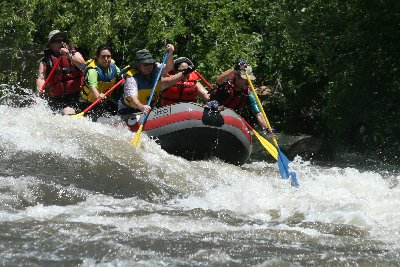
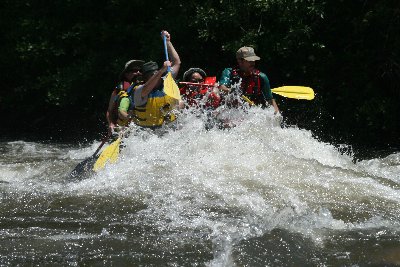
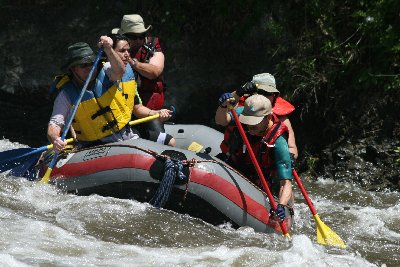
    We head into the Euwing rapids.

    We headed into the Euwing rapids.

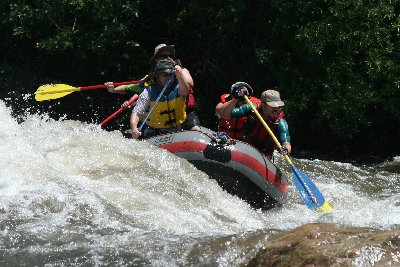
    We hit the first pit - I laugh at danger!

    We hit the first pit – I laugh at danger!
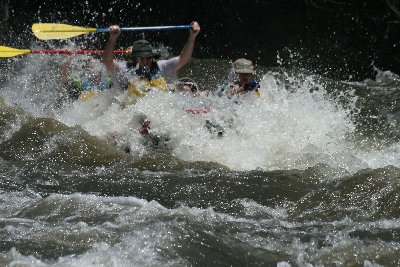
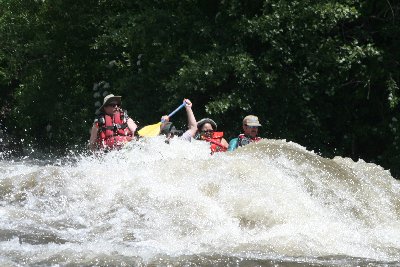
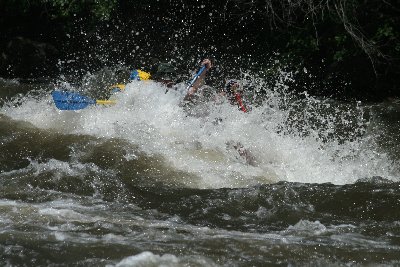
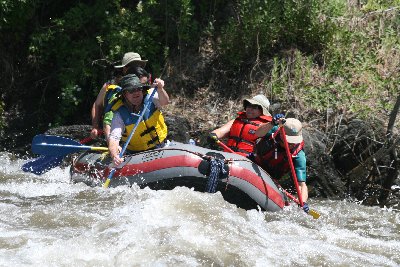
    The raft gets drenched...

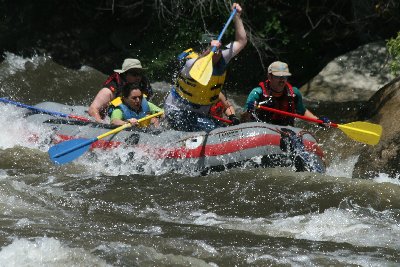
    Miraculously, we don't flip and everyone stays in the boat.

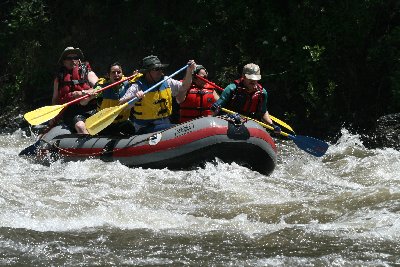
    The fun is just beginning...

    The fun is just beginning…

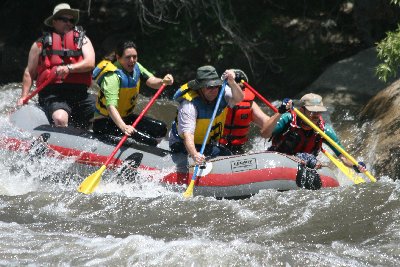
    All forward! Dig! Dig! Dig!

    All forward! Dig! Dig! Dig!”

    Cheating death yet again!

    The raft gets flooded.

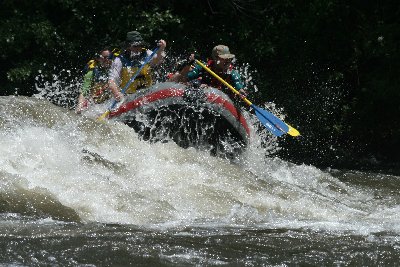
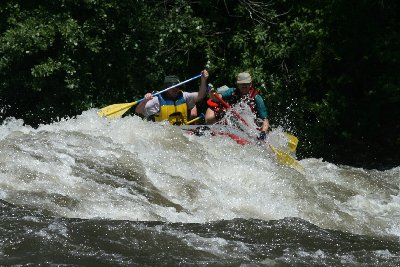
    Up and over!

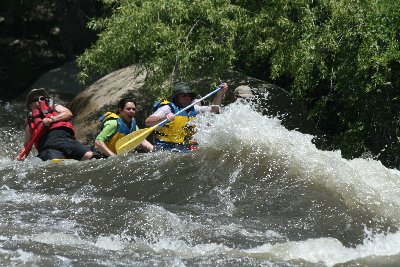
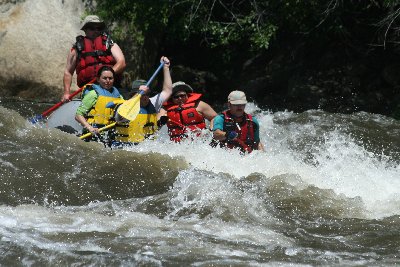
    Another pit!

    Soaked again!

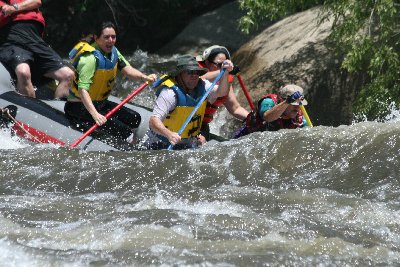
    Rock! Rock! Rock!

    “Rock! Rock! Rock!”

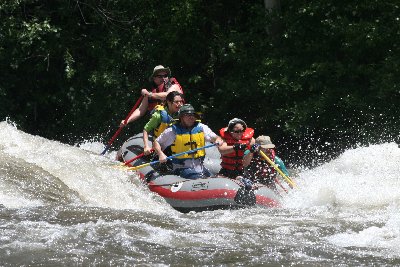
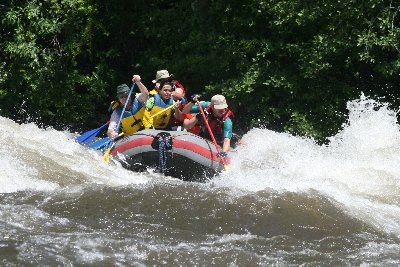
    We made it through the Euwing rapids without a scratch!
    We made it through the Euwing rapids without a scratch!

    We brought the raft back up river.
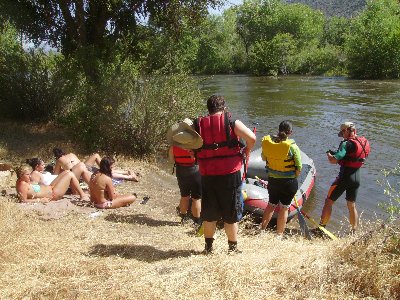
    We brought the raft back up river.

    We relaunched at the same spot, but some hot chick sun bathers tried to take over the beach.

    We relaunched at the same spot, but some hot chick sun bathers tried to take over the beach… they practically fainted at the site of pirate rafters!
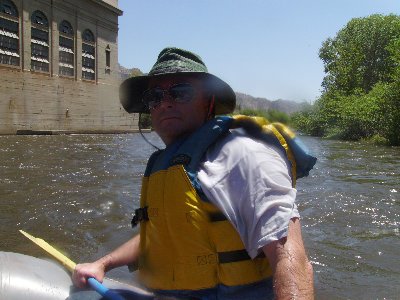
    Do I look macho, or what?

    Do I look macho, or what?

    I’ve noticed that the commercial rafting outfits cater to everyone, regardless of experience, just like Instructor John does.

    However, they charge an insane amount of money – I think $40 to $80 – for two runs down.

    They launch below Power House and stretch a 25 minute run down the river by having water fights and pulling over for some swimming.

    Depending on who is on board, they might purposely miss some of the waves and pits, which may be a good thing for them.

    Here comes our second run at the Euwing rapids…
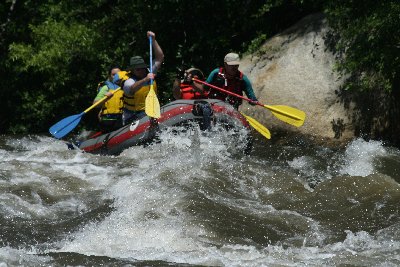
    We start our second run at Euwing!

    Cheating death again on the Kern!

    Submerged again!

    All forward! Dig! Dig! Dig!

    “All forward! Dig! Dig! Dig!” John yelled.
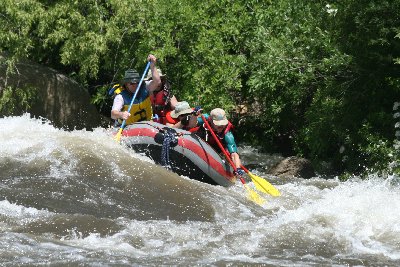
    Go! Dig! Dig!

    I almost fell out of the raft on this one.

    The seas parted!

    We're trying not to flip!

    We made it!

    Another successful run!

    We made two more trips down the upper Kern, all without a wipe out, crash or anyone falling out.
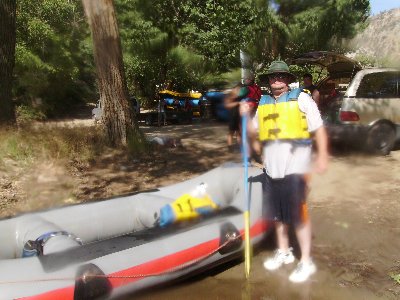
    Macho man me, done for the day.
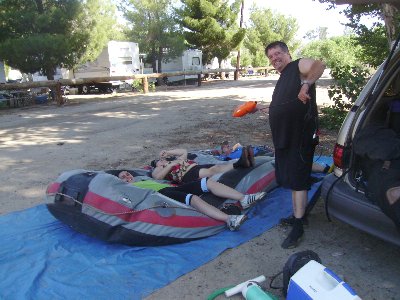
    Macho man me, done for the day.

    The ceremonial deflating of the raft.
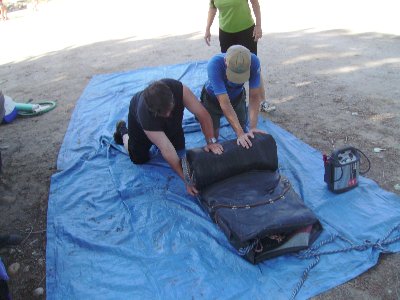
    The ceremonial deflating of the raft.

    The ceremonial rolling up of the raft.

    The ceremonial rolling up of the raft.

    Hopefully, we can get a few more weekends of rafting in, but it doesn’t look too promising.
    May 15, 2009

    How I Serviced My Spare Air

    Being dry for a few weeks, I decided to do some long awaited maintenance on my “Spare Air,” which is the emergency three cubic feet of air that I carry with me on all my dives.

    My Spare Air was leaking to the point that it just couldn’t hold air for even one dive, hadn’t been given a visual inspection in the four years that I’ve had it and had mold and ocean slime encrusting the regulator.

    Facing dire poverty with furlough days at my real job and increasing beer prices, there was no way I could afford the $55 the manufacturer wanted for servicing, so I decided to do it myself.

    Note: Servicing and repairing your own equipment is frowned upon by a lot of divers, so I am not recommending that you should do what is described here.

    This article simply describes how I serviced my Spare Air and is not a Do-It-Yourself guide.

    I emptied all the air out of the cylinder, which was pretty much empty anyway.

    The air gauge is a little brass fitting that protrudes from the regulator’s side; using the gauge as leverage, the regulator came off fairly easily with a firm counter clockwise twist.

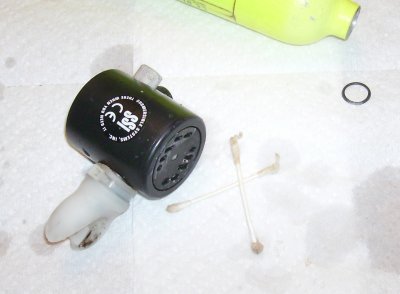
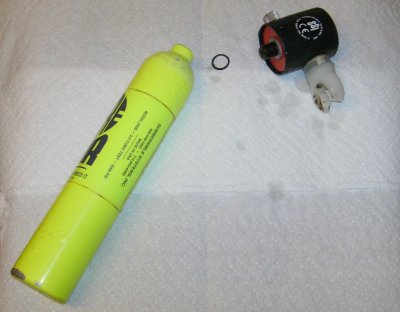
    Disassembled Spare Air

    The “always on regulator” for the spare air is basically a sealed “black box” – no user serviceable parts; I had no idea how to take it apart and I was afraid that if I did, I wouldn’t be able to put it back together.

    However, I do know that it worked well, and I would have spent the $55 for professional servicing if there were problems.

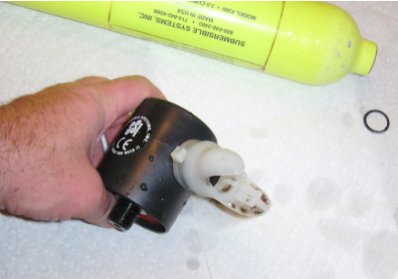
    A fungus encrusted spare air regulator.

    If I didn’t clean the mouthpiece, if I ever had to use it – assuming there was still air in it- I probably would have contracted some weird disease.

    Cleaning Spare Air

    Using alcohol and Q-tips, I cleaned underneath the rubber mesh that covered the purge button.

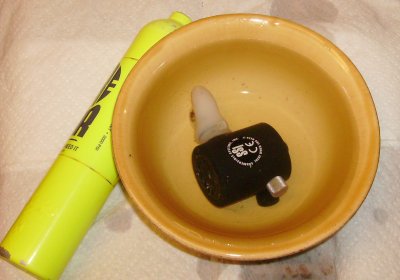
    Soaking the Spare Air Regulator

    To clean the petrified sea residue and mold off the regulator, I soaked it over night in a fairly strong solution of warm water and chlorine bleach.

    The next morning, most of the encrusted grit laid on the bottom of the bowl.

    The mouthpiece did not need replacing and with a light scrubbing, the mold just wiped away.

    I soaked the regulator in warm water for another hour before laying it out to dry.

    While getting my primary tanks filled at the local dive shop, I brought in the Spare Air cylinder and regulator.

    For $5, the manager gave the cylinder a visual inspection and replaced and lubricated the O-rings – there’s an O-ring between the regulator and cylinder and another one on the filling stem.

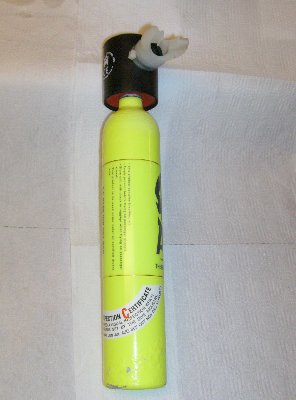
    My newly refurbished spare air.

    Now, with a vis sticker, new O-rings and all the grime off, I once again have a reserve tank that holds air and is in perfect working order – while enjoying a $50 savings!

    « Previous PageNext Page »


    RSS Subscribe
    Subscribe!


    ©Copyright 2002-2026 Psychosolodiver.com. All Rights Reserved. However, if you are going to steal anything from this site, please give me credit and link back.