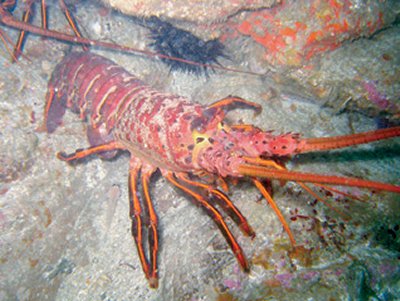
California Court Slams Wardens For Illegally Stopping Motorists Over Lobsters
California Court of Appeal smacks down Department of Fish and Game for stopping and searching cars without authority.
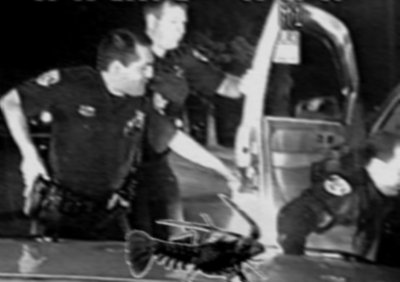
The California Court of Appeal for the Fourth District on Tuesday ruled that a state agency may not pull over and search a motorist on a mere hunch that a lobster might be hidden in the vehicle. The court considered the case of Bounh Maikhio, a motorist stopped by Department of Fish and Game Warden Erik Fleet on August 19, 2007 at 11pm. That evening, Fleet had been spying through a telescope on the Ocean Beach pier in San Diego when he saw Maikhio put something into his bag.
Fleet testified that he did not “necessarily” suspect Maikhio of a crime because he had no way of knowing whether the man had been fishing legitimately or not. Regardless, Fleet waited until Maikhio had driven away from the pier to stop him. While searching through his car. Fleet found Maikhio’s bag, which contained a spiny lobster. Maikhio was handcuffed and cited for lobster possession during closed season.
The case is of particular interest because California Attorney General Jerry Brown argued that a state warden has the right to stop any driver “without reasonable suspicion that he committed any crime.” Maikhio, in contrast, could not afford to hire an attorney and was represented by the public defender’s office which argued no such authority existed. The appeals court agreed, citing a 1944 attorney general’s ruling. The court argued that wardens could enforce the law without harassing motorists.
“It may be fairly implied from sections 1006 and 2012 that a DFG warden generally has the implied power to stop people who are fishing on a pier to demand they exhibit their catch and to inspect their receptacles (e.g., tackle boxes, pails, etc.) in which fish may be stored,” Justice Alex C. McDonald wrote for the majority. “However, contrary to the people’s conclusory assertion, it cannot be fairly implied from the DFG’s express statutory powers that its wardens have the power to stop a specific vehicle on a public street and detain its occupants to make a section 2012 demand and conduct a section 1006 inspection.”
The court went on to explain that because the warden had no individualized suspicion that Maikhio had been involved in criminal activity, the stop was just as unconstitutional as setting up a roadblock to search every passing vehicle for lobsters.
“Although the people argue Fleet’s method of using a spotting scope to observe fishing activity and then stop vehicles on public streets to check compliance with fishing laws and regulations is the most effective means of promoting the government’s interest in protecting fish, the fact that a certain method of promoting a government interest is the most effective does not necessarily make it reasonable under Fourth Amendment, particularly if a less intrusive method exists,” McDonald explained.
Justice Patricia D. Benke disagreed, arguing that Constitutional protections do not apply to motorists who may also be hunters or fishermen.
“Because of the highly regulated nature of hunting and fishing and the consequent diminished expectation of privacy of hunters and fisherman, there is no requirement in our statutes or under the Constitution that a game warden believe that any crimes have been committed or that any game regulations have been violated before exercising his or her powers of inspection,” Benke wrote in her dissent.